The next step should not need a meeting.
The next step should not need a meeting.
A surprising amount of slow work is really just unclear work.
Not because the team is lazy.
Not because the project is hard.
Because nobody can tell what happens next without getting everyone back on a call.
That is usually a workflow problem, not a people problem.
When work depends on memory, context trapped in one person's head, or a verbal recap that vanishes the second the call ends, the meeting stops being a coordination tool and starts becoming infrastructure.
Then the real system is not the board, the doc, or the task itself. The real system is calendar availability.
That is where speed dies.
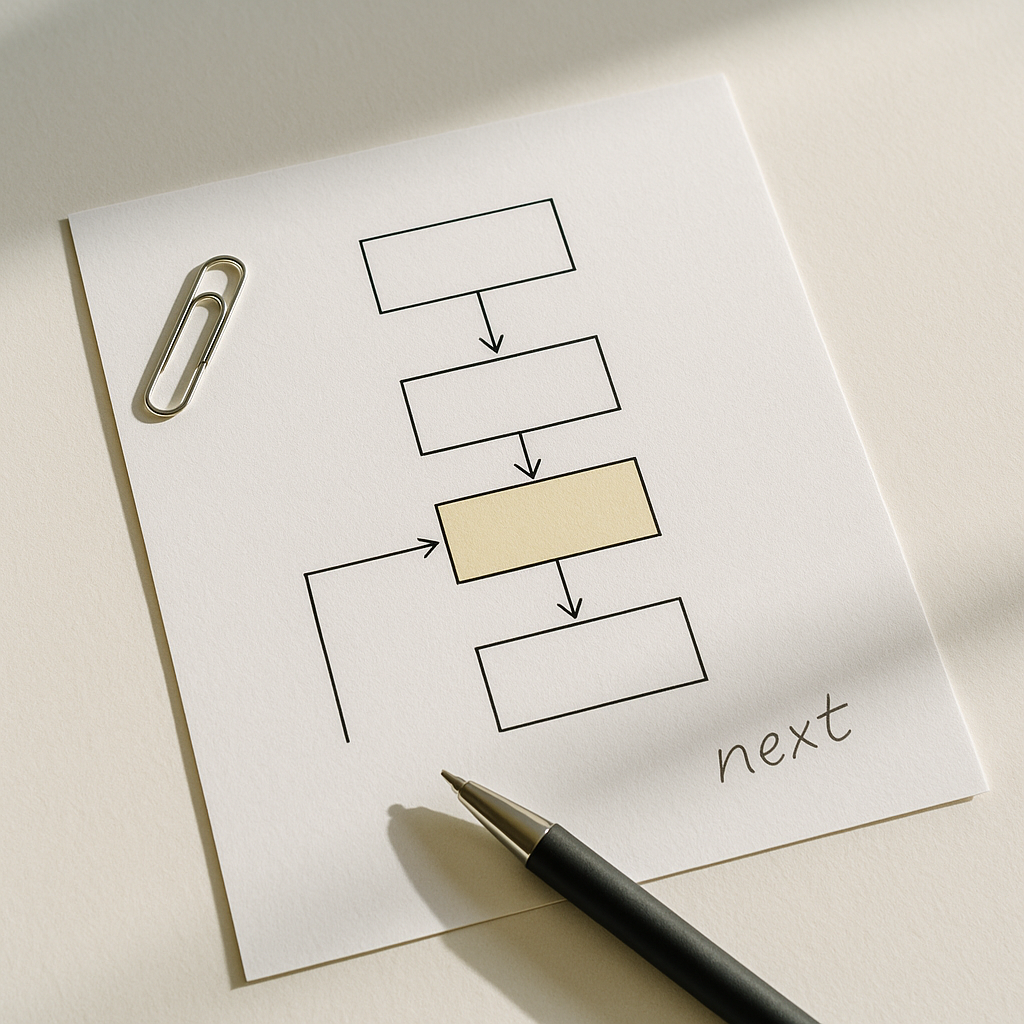
If a task is done, the next owner should be obvious.
If it is blocked, the blocker should be obvious.
If a decision is needed, the decider should be obvious.
Those three things sound simple, but they remove a surprising amount of drag. People do not need perfect process. They need enough clarity to move without asking the room to reassemble every time a handoff happens.
When the next step only exists in somebody's head, the meeting becomes part of the process.
Then the work waits for calendars instead of moving.
A good workflow should survive the meeting.
It should leave behind a clear next move that someone can act on without needing the whole room again.
That does not mean there is never a reason to talk. Meetings are still useful for decisions, tradeoffs, and real discussion. But they should create clarity, not act as a recurring permission slip for progress.
If the team keeps needing another call just to figure out what happens next, the system is asking people to carry too much of the workflow manually.
And manual workflow is usually where time disappears.