Context should travel with the work
Context should travel with the work.
A handoff is not done just because the task changed hands. If the next person has to stop and ask what happened, what changed, or what they are supposed to do now, the work did not really move. The ownership moved. The context did not.
That is where teams quietly lose time. Not in the big planning session. Not in the visible project kickoff. They lose it in the small rebuild that keeps happening after every incomplete handoff.
Someone picks up a task and has to dig through messages. They ask for the latest version. They try to remember which decision actually stuck. Ten minutes disappear here, fifteen there, and suddenly a simple piece of work feels heavier than it should.
Most teams do not have a motivation problem in moments like that. They have a context problem. The work got separated from the notes, the reason behind the change, and the next move.
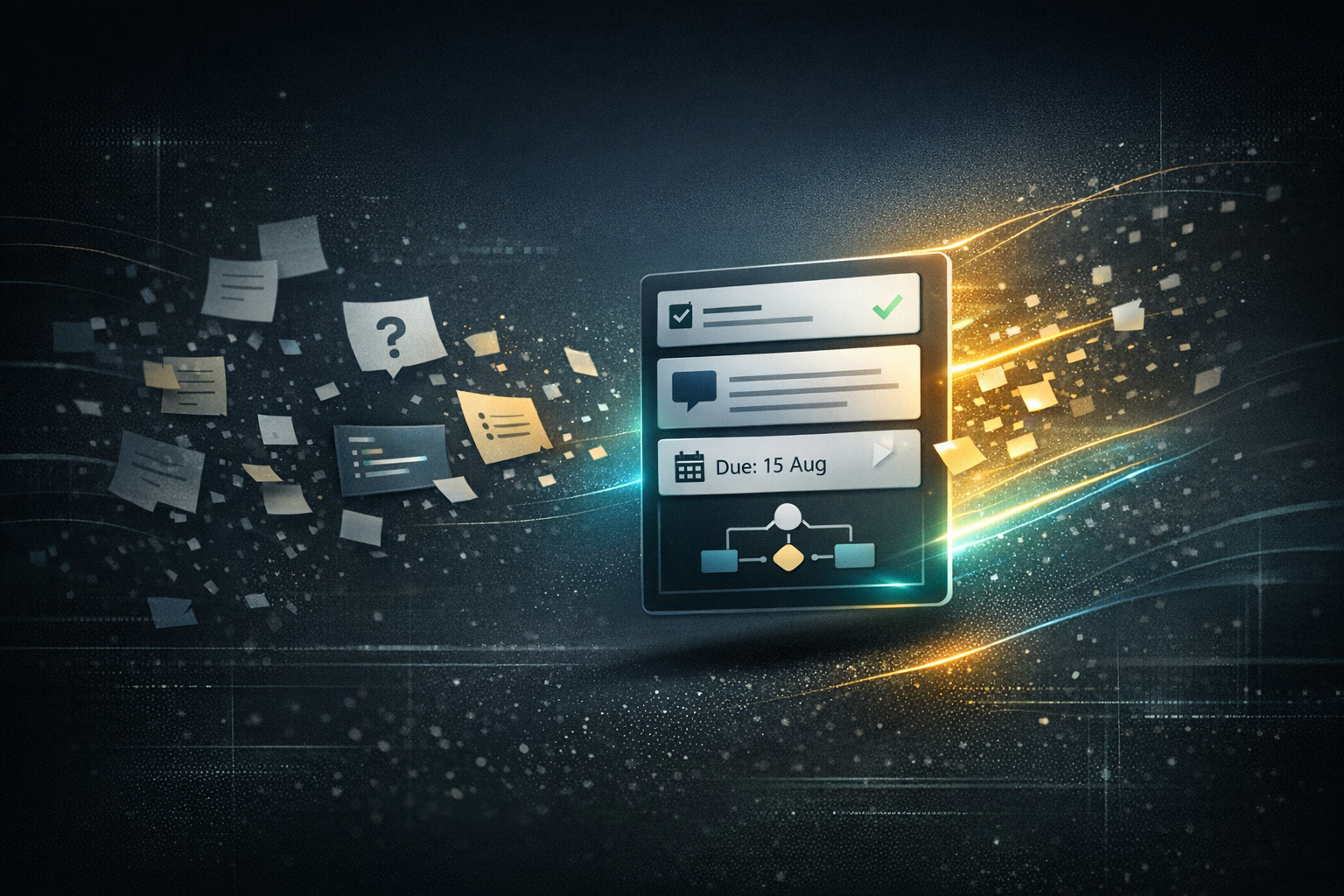
Good systems close that gap. They do not just move the task from one person to another. They carry the supporting context with it. The notes stay attached. The decision trail stays visible. The reason something changed stays easy to find.
That matters because people should be able to continue the work without playing detective first. If every handoff requires reconstruction, the system is adding drag instead of removing it.
This is one of the simplest tests for whether a workflow is actually helping. Can the next person open the work and keep going? Or do they need a side conversation before they can take a real step?
When context travels with the work, handoffs get cleaner. Follow-up gets faster. The team spends less energy rebuilding the past and more energy moving the work forward.
That is the point. Better workflows are not about making things look more organized. They are about making progress easier to continue.