
The Lab Blog
Practical insights on AI strategy, workflow automation, and building systems that save time for your business.
Allaiai operationsai-operationsapprovalsautomationautonomyclaritycollaborationcontextdeadlinesdecision-makingdependenciesdisciplined autonomyexecutionfollow-upfounder povfounder-povgovernancehandoffsoperationsownershipprioritiesprioritizationprocess designproductivityroxstarroxstar labsroxstar-labssystemsteam clarityteam executionteam-communicationtime backversion-controlworkflowworkflow designworkflow-designworkflows

June 6, 2026|2 min read
The cleanup should not become the process
Teams lose time when the real workflow quietly becomes the fix-up work that happens after every supposedly finished task.
aioperationsworkflow
Read more →
June 6, 2026|2 min read
The fast path should know its limit
A workflow gets expensive when it keeps its momentum past the point where the next step needs judgment instead of routine execution.
workflowoperationsaiautonomy
Read more →
June 5, 2026|2 min read
The work should survive the end of the day
If unfinished work needs a recap before it can move again tomorrow, the system is spending the same time twice.
operationsworkflowaifounder-pov
Read more →
June 5, 2026|2 min read
The fix should be there on the next run
A problem is not really solved if the answer disappears after one use and the same workflow comes back with the same gap still in it.
aioperationsworkflow-designsystems
Read more →
June 4, 2026|2 min read
The team should not need a debrief to know what happened
When the only way to understand the current state of the work is another recap call, the system is asking people to rebuild context instead of carrying it forward.
aioperationsworkflowfounder-pov
Read more →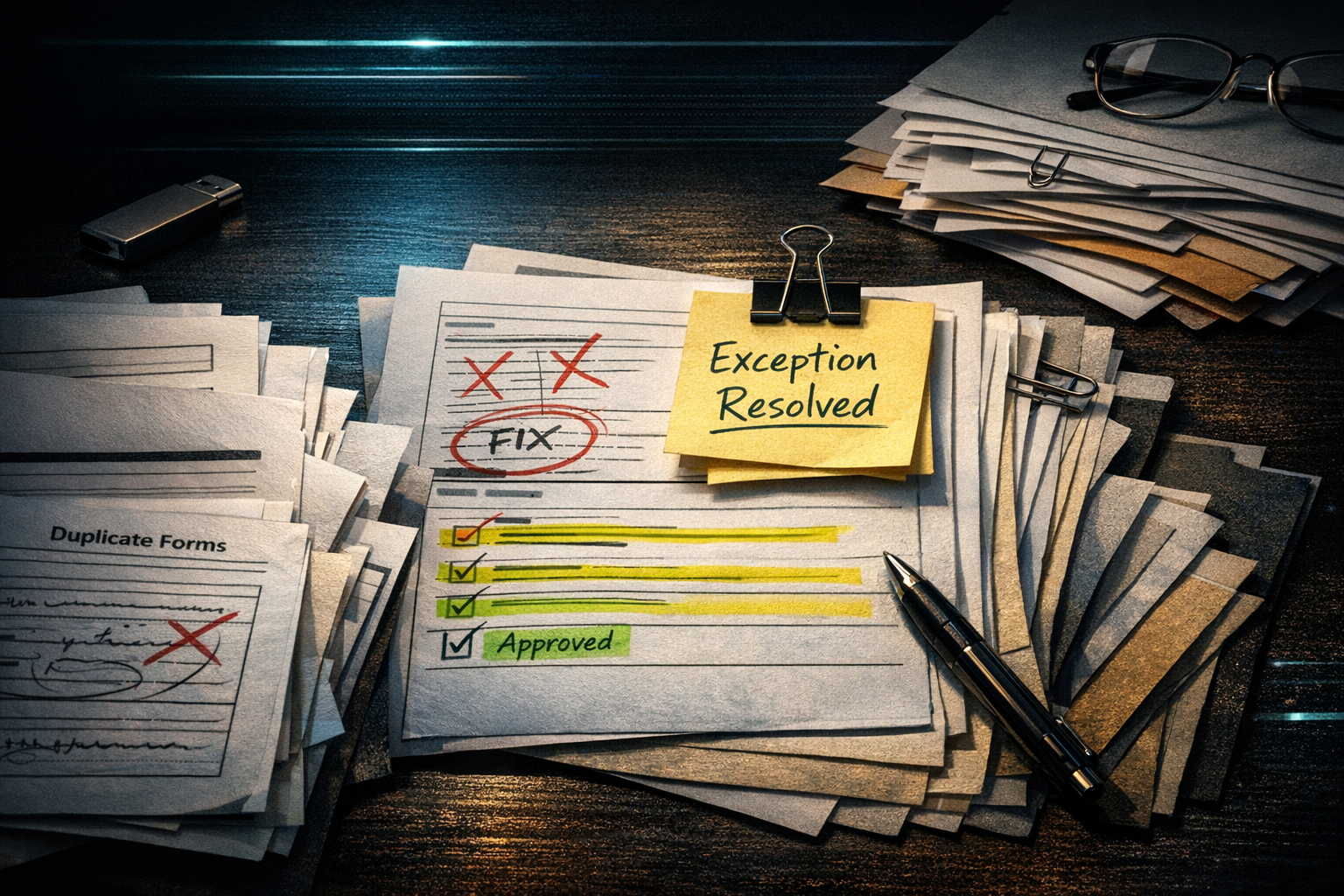
June 3, 2026|2 min read
The exception should not turn into rework
If a team clears an exception without capturing the decision where the work lives, the same issue often comes back as avoidable rework.
aioperationsworkflowautomationfounder-pov
Read more →
June 2, 2026|2 min read
The system should not decide past the stop sign
Automation should carry routine work forward, but it should stop cleanly when the work reaches an exception, a policy edge, or a decision that needs human judgment.
aioperationsworkflow designautonomy
Read more →
June 2, 2026|2 min read
The work should still make sense tomorrow
If a task only feels clear while the people in the thread still remember what happened, the system is forcing the team to keep re-entering work from scratch.
aioperationsworkflow designfounder pov
Read more →
May 31, 2026|2 min read
Speed should stop at the exception
Fast systems are useful on routine work, but the real test is what happens when the case no longer fits the rule.
aioperationsworkflow-designautomation
Read more →
May 31, 2026|2 min read
The work should explain itself
When routine progress still depends on one person translating status, blockers, and next steps for everyone else, the workflow is carrying too much hidden context.
aioperationsworkflow-designfounder-pov
Read more →
May 31, 2026|2 min read
The rule should not live in a side message
A workflow is still broken when the real process only appears in buried chat threads, private notes, or memory instead of where the work actually happens.
operationsworkflowautomationai
Read more →
May 29, 2026|2 min read
Work should not need an interpreter
If every status update still needs one person to explain what it means, the workflow is leaning on memory and translation instead of carrying clear state on its own.
aioperationsworkflow
Read more →
May 28, 2026|2 min read
Automatic should not mean irreversible
Fast systems are useful on routine work, but actions that change money, ownership, or commitments should hit a human checkpoint before they become expensive to unwind.
aioperationsworkflow-design
Read more →
May 27, 2026|2 min read
If the update needs a meeting, the system is late
When teams use meetings to reconstruct what changed instead of decide what happens next, the workflow is carrying too little context.
aioperationsworkflow-design
Read more →
May 23, 2026|2 min read
Admin drag should expire
A surprising amount of wasted time comes from stale reminders, duplicate check-ins, and follow-ups that stay alive after the real decision is already done.
aioperationsworkflow
Read more →
May 21, 2026|1 min read
Failures should leave receipts
When a failed run leaves no trail, teams spend more time reconstructing the problem than fixing it.
workflowoperationssystemsai
Read more →
May 21, 2026|1 min read
Retries should not start from scratch
Teams lose time when failed runs come back as blank slates instead of carrying forward the last useful state.
workflowoperationssystemsai
Read more →
May 20, 2026|1 min read
Work should resume from where it stopped
Teams lose time when paused work returns without a clear last state, forcing people to rebuild momentum by hand.
operationsworkflowaiexecutionroxstar
Read more →
May 20, 2026|2 min read
Recurring work should remember its last run
Teams waste time when routine work starts from scratch instead of carrying forward what changed, what failed, and what is still open.
workflowoperationssystemsai
Read more →
May 9, 2026|4 min read
The next step should be clear
Work slows down when nobody can tell what is supposed to happen next.
aioperationsworkflowteam clarity
Read more →
May 9, 2026|3 min read
The next step should be clear
Teams lose speed when work exists but nobody can tell what is supposed to happen next.
operationsworkflowexecutionai
Read more →
May 9, 2026|2 min read
Context should travel with the work
When work moves without the reason, notes, and decision trail attached, teams waste time rebuilding context instead of moving forward.
operationsworkflowsaiexecution
Read more →
May 8, 2026|2 min read
Work should not depend on memory
When the next step only lives in somebody's head, the work slows down. Good systems keep the context attached and the next move visible.
operationsworkflowsaiexecution
Read more →
May 8, 2026|2 min read
Status should be visible
Teams lose time when updates exist but nobody can see the real state of the work without asking around.
operationsworkflowaiexecution
Read more →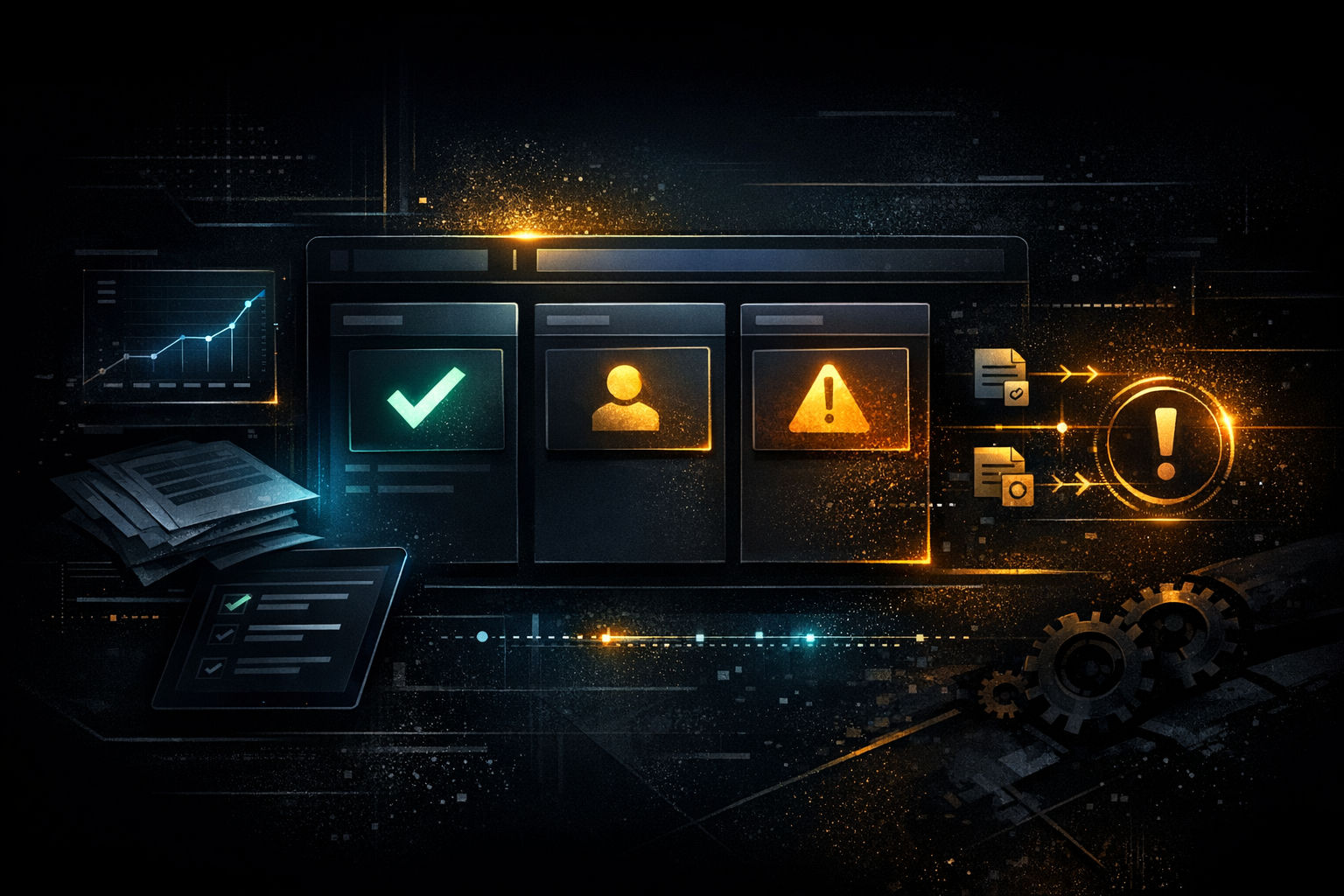
May 7, 2026|1 min read
Routine questions should not need a meeting
Routine questions should be answered by the workflow, not another meeting.
operationsworkflowexecutionai
Read more →
May 7, 2026|1 min read
What changed should be obvious
Teams should not need a meeting just to figure out what changed. Good systems make changes visible in the right place, at the right time.
aioperationsworkflowfounder-pov
Read more →
May 6, 2026|1 min read
Exceptions should be obvious
Good operations do not ask people to babysit every step. They make exceptions obvious and handoffs fast.
aioperationsworkflowfounder-pov
Read more →
May 6, 2026|1 min read
Fewer dashboards, clearer decisions
Good systems should make decisions clearer, not add another dashboard, alert stream, or hidden handoff to babysit.
roxstar-labsoperationsworkflowaifounder-pov
Read more →
May 6, 2026|1 min read
Boring Is Good When the Workflow Works
The best automation usually gets boring pretty fast. That is a good sign.
roxstar-labsoperationsworkflowai
Read more →
May 6, 2026|1 min read
Governed execution, not black-box automation
Good AI operations should save time without turning the business into a black box. Teams need clear ownership, approval points, and visibility into what changed.
aioperationsworkflowgovernancefounder-pov
Read more →
May 6, 2026|1 min read
Time back, not another layer of management
AI should give teams time back, not create one more system to babysit.
aioperationsworkflowproductivityfounder-pov
Read more →May 5, 2026|2 min read
Workflows Over Hype
Most businesses do not need more AI noise. They need cleaner workflows that hold up in real operations and give people time back.
roxstar-labsworkflowoperationsai
Read more →
April 20, 2026|2 min read
Practical AI Systems for Businesses Without the Software Theater
Most businesses do not need more AI tools. They need less operational drag, fewer broken handoffs, and practical systems that make the work move better.
roxstar-labsoperationsworkflowai
Read more →