The latest version should not be a debate
The latest version should not be a debate
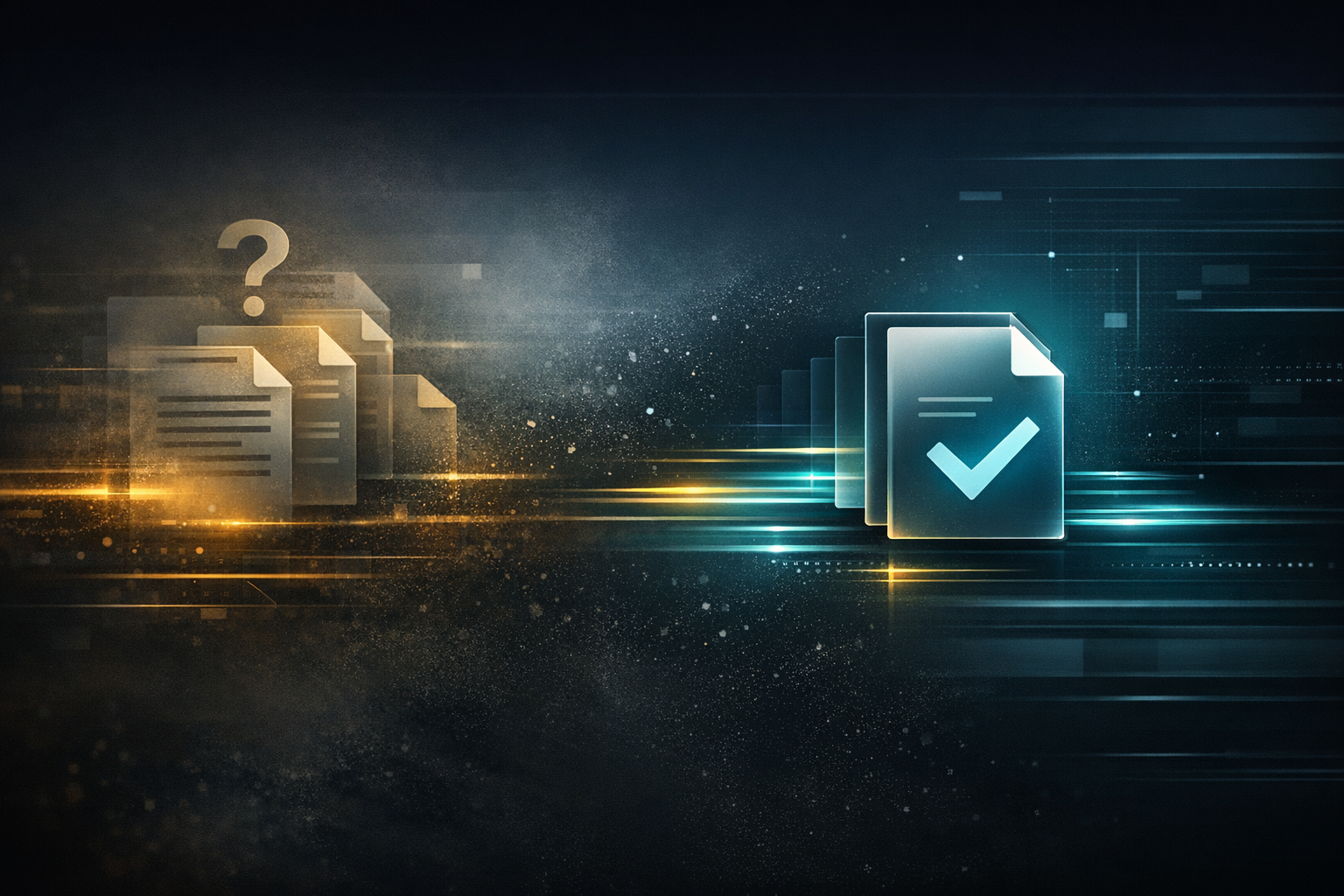
A surprising amount of team drag comes from a question that should never need airtime: which file is real?
The work itself may be fine. The problem is that the current state is not obvious.
One person is looking at the board. Another is reading a forwarded note. A third has the “latest” link from two days ago. Somebody else is working from a screenshot because it was faster than finding the source.
Now the team is not moving the work. The team is trying to reconstruct reality.
That reconstruction tax adds up fast.
When the active record is unclear, people slow down for self-protection. They ask for recaps. They hold decisions. They hesitate to approve. Good work sits still because nobody wants to push the wrong version forward.
This kind of friction often gets misdiagnosed as a communication problem. Sometimes it is. But a lot of the time it is really a system-design problem.
If the current state of a piece of work is hard to find, the process is already leaking time.
A useful operating system for a team should make a few things obvious without explanation:
- what the active record is
- who owns the next move
- what changed most recently
- whether the work is ready for review, blocked, or done
That sounds simple, but teams drift away from it constantly. They add another tool, another message thread, another “just for now” handoff, and suddenly the cost of staying aligned is higher than it should be.
The fix usually is not another meeting.
It is usually a cleaner source of truth.
That can mean one live document instead of three duplicates. One board that reflects reality instead of a board plus side-channel memory. One obvious owner instead of shared ambiguity. One visible next step instead of status that has to be translated in a call.
The goal is not bureaucratic neatness. The goal is momentum.
Teams move faster when the work is legible.
When the latest version is obvious, approvals get sharper. Feedback gets better. Handoffs get cleaner. People stop burning time on orientation and spend more of it actually solving the problem.
Most teams do not need more process.
They need less version fog.
The latest version should not be a debate.