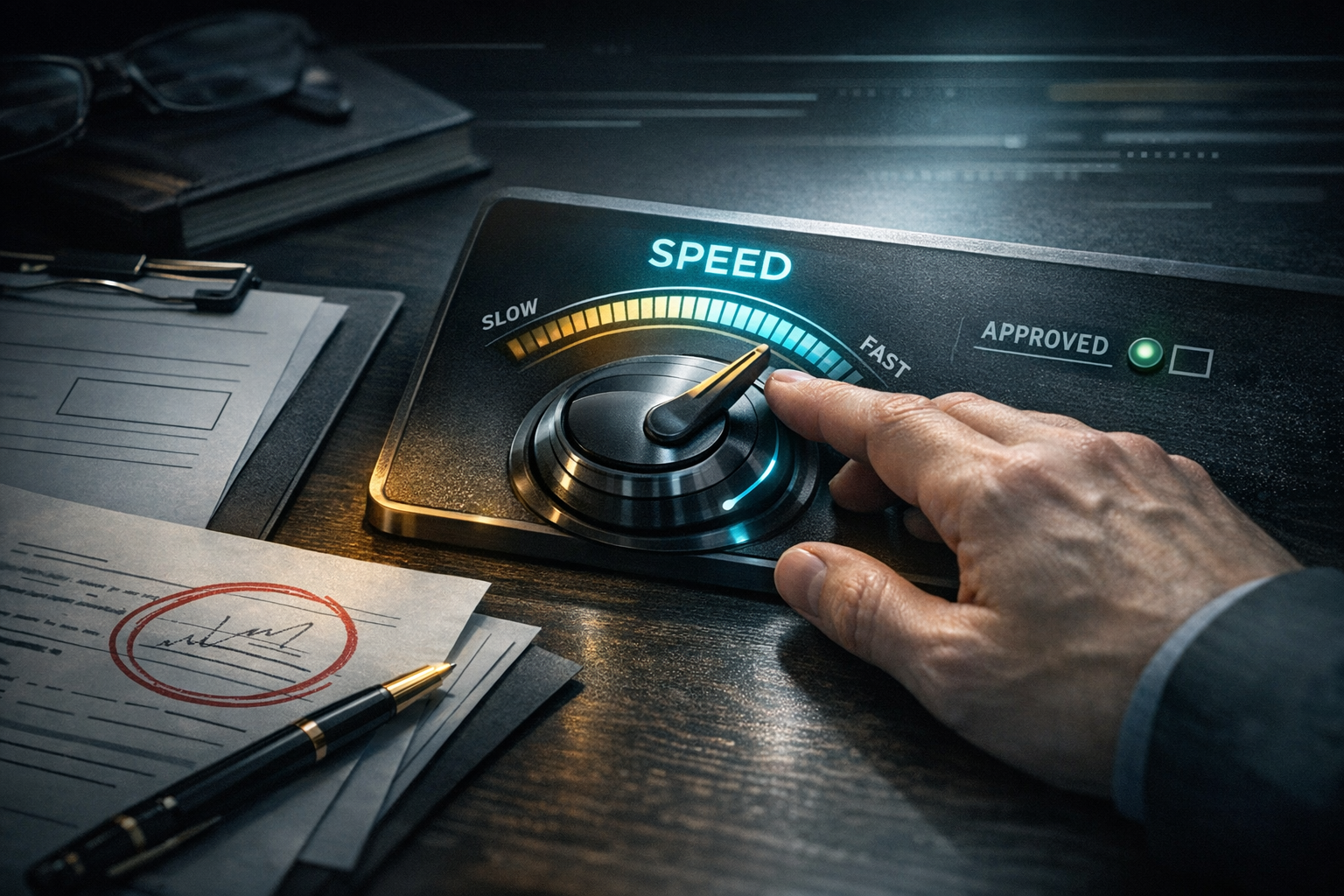
Confidence should set the speed limit
A lot of automation problems do not start with a dramatic failure. They start with a system treating a messy case like a clean one.
Everything looks fine while the rule is obvious. The inputs match. The path is familiar. The next step is clear. Speed feels like a strength because the work is routine and the system is carrying it without friction.
Then the signal gets weaker. A detail is missing. A request is close to the normal pattern but not actually inside it. The context does not line up as cleanly as it did a moment earlier.
This is where weak systems create cleanup. They keep moving at the same speed anyway. They approve, route, send, or update as if nothing changed. The cost does not always show up immediately, but it shows up later when someone has to unwind the wrong move by hand.
Good systems should not be judged only by how fast they move on the easy cases. They should also know what to do when certainty drops. Maybe the right move is to pause. Maybe it is to ask a question. Maybe it is to hand the decision to a person instead of pretending the answer is still obvious.
That is not wasted time. It is control. The goal is not maximum motion at all times. The goal is reliable execution that keeps simple work fast without turning fuzzy work into preventable rework.
Speed is useful when the answer is clear. When it is not, confidence should set the speed limit.